Numbers play vital roles in our life. Whether it’s a common man or an expert. Our brilliant ancestors invented the numbers, However we have taken it casually. Every number is unique and important.
The number 3 is significant in different cultures and religions around the world. And also in the Sanatan dharma. Today we’ll try to bring some significance of Number 3. Let’s explore the influence of number 3 in some aspects of human life.
The Trimurti (त्रिमूर्ति) or Trideva (त्रिदेव)
- Brahma (Creator)
- Vishnu (Preserver)
- Mahesh (Destroyer)
The Tridevi (त्रिदेवी) or Three Goddesses
- Saraswati (Brahma’s Wife)
- Lakshmi (Vishnu’s Wife)
- Parvati (Mahesh’s Wife)
The Trishula (त्रिशूल)
The “Trishul” held by Lord Shiva is a symbolic representation of various trinities of the universe. The three points have various meanings and significance, and, common to the Hindu religion. They are commonly said to represent various trinities as described below.
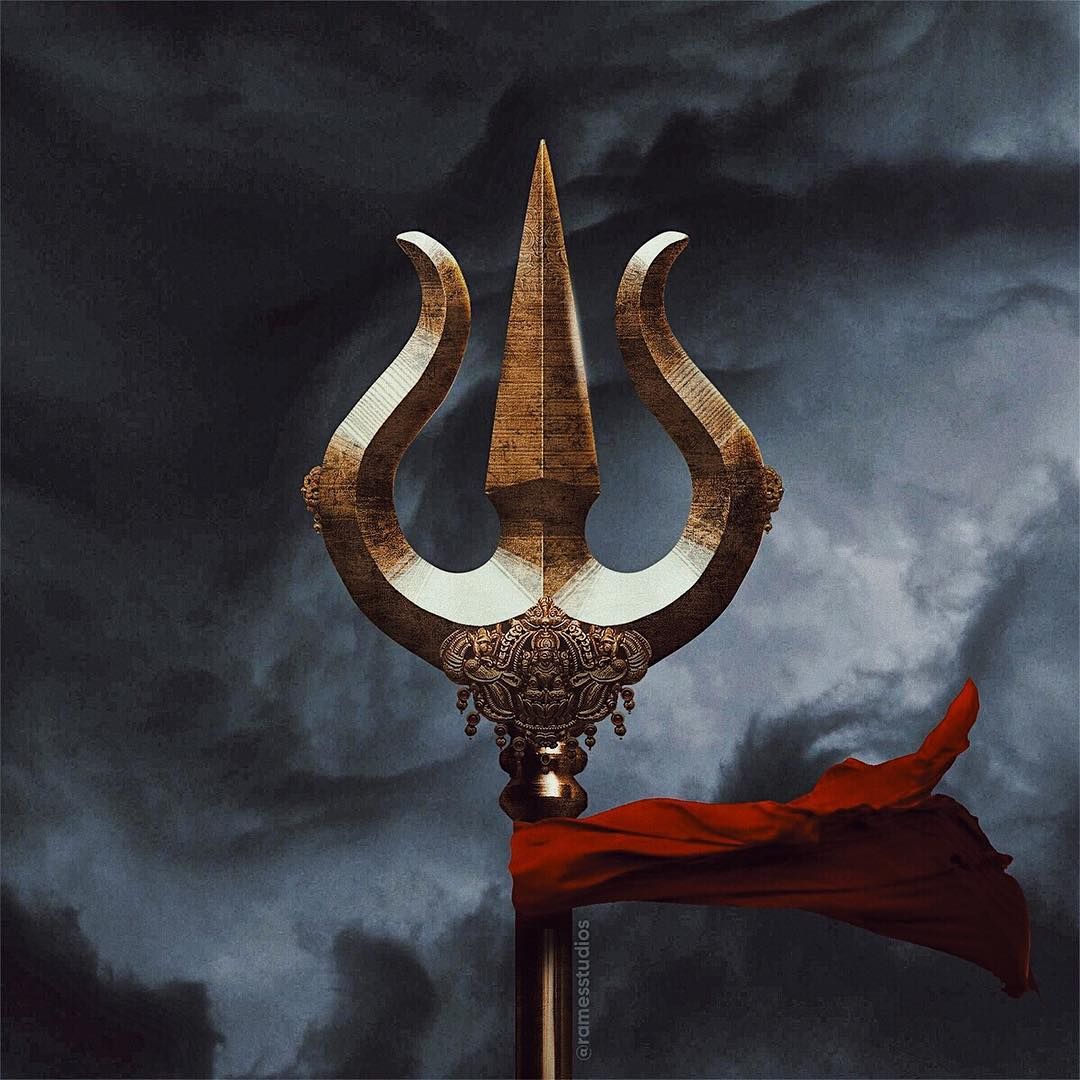
Trishula
(Image Credit: https://www.instagram.com/ramesstudios/)
The Three Lokas (त्रिलोक)
- Swarg Loka (Heaven)
- Bhu Loka (Earth)
- Patal Loka (Underworld)
The Three Divisions of Time (त्रिकाल)
- Past
- Present
- Future
The Trinetra (त्रिनेत्र) / Three Eyes
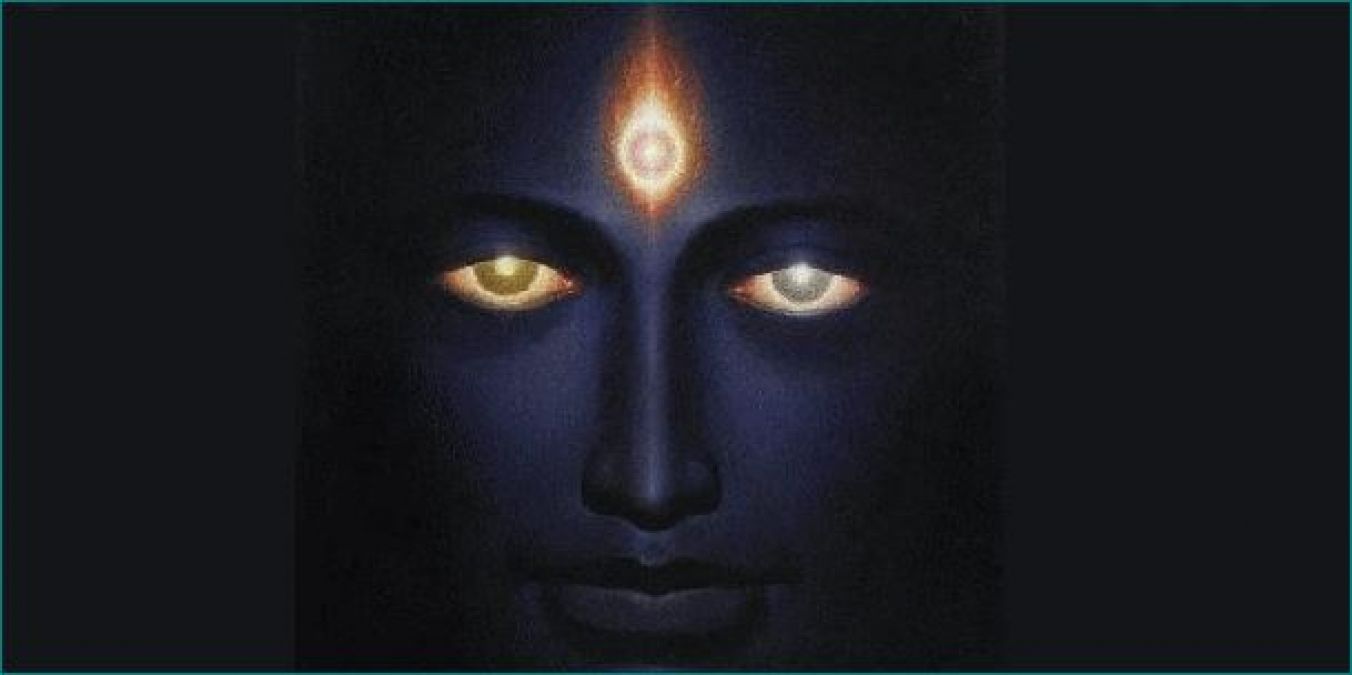
Trinetra
(Image Credit: https://english.newstracklive.com/)
The Trievni Sangam (त्रिवेणी संगम)
- Ganga
- Yamuna
- Saraswati
The Trikal Sandhya (त्रिकाल संध्या) Worships
- Pratah Sandhya (Morning Worship)
- Madhyamika Sandhya (Noon Worship)
- Sayam Sandhya (Evening Worship)
Trikal Sandhya consists of recitation of mantras from the Vedas. Tirkal means three times’. Sandhya means meeting points of day & night and forenoon & afternoon. Trikal Sandhya is also called Sandhyopasana. This is a process of expressing gratitude to nature and formless almighty.
The Bilva leaf or Bel Patra (बेलपत्र) / Trifolic Leaves
Bel tree is considered a very sacred and holy tree in the Hindu religion. The leaves of this tree are generally trifolic-a leaf that’s divided into three leaflets–which are believed to represent the ‘Trinetra‘ or three eyes of lord Shiva.

Bel Patra
(Image Credit: https://in.pinterest.com/astrologyguidance/)
The Three Modes of Nature (प्रकृति) / World (विश्व)
- Creation (Birth)
- Maintenance (Life)
- Destruction (Death)
The Spirituality (आध्यात्मिकता) Represents Connection of Three Items
- Body
- Mind
- Soul (आत्मा)
The Three Fundamental Dosha (दोषों) in Human Body
- Vata
- Pitta
- Kapha
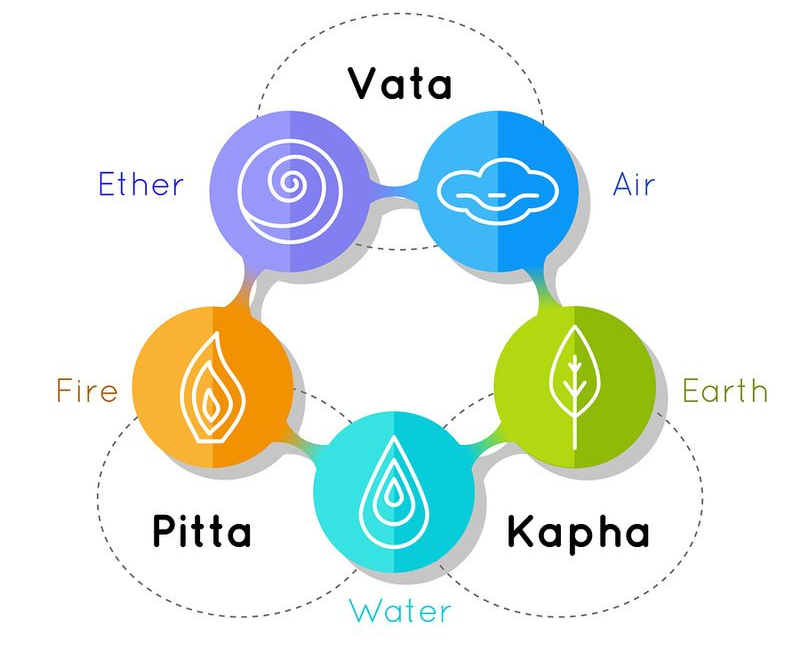
Vata Pitta Kapha Doshas
(Image Credit: https://www.charakveda.com/three-doshas-in-ayurveda/)
According to Ayurveda, each person is born with a life force that comprises the five elements or building blocks of nature: Earth, Air, Water, Fire and Space. We possess a unique balance of these five elements in varying degrees. This balance of elements is known as a Dosha. There are three fundamental doshas: Vata, Pitta and Kapha, and good health is considered to be a perfect state of balance between these three doshas.
The Three Quality (गुण) of Nature (प्रकृति)
- Sattva (goodness, calmness, harmonious)
- Rajas (passion, activity, movement)
- Tamas (ignorance, inertia, laziness)
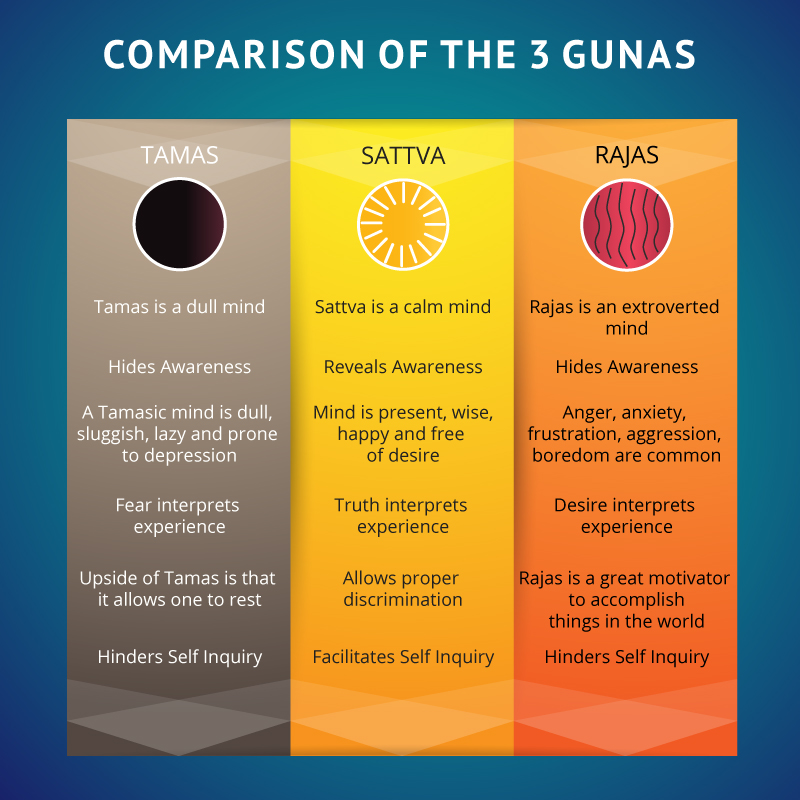
Sattva-Rajas-Tamas Comparison
(Image Credit: http://explorevedanta.com/)
The Atom (परमाणु) made of Three Types of Particles (अणु, कण)
- Proton (Positive Charge) (+Ve)
- Neutron (No Charge)
- Electron (Negative Charge) (-Ve)
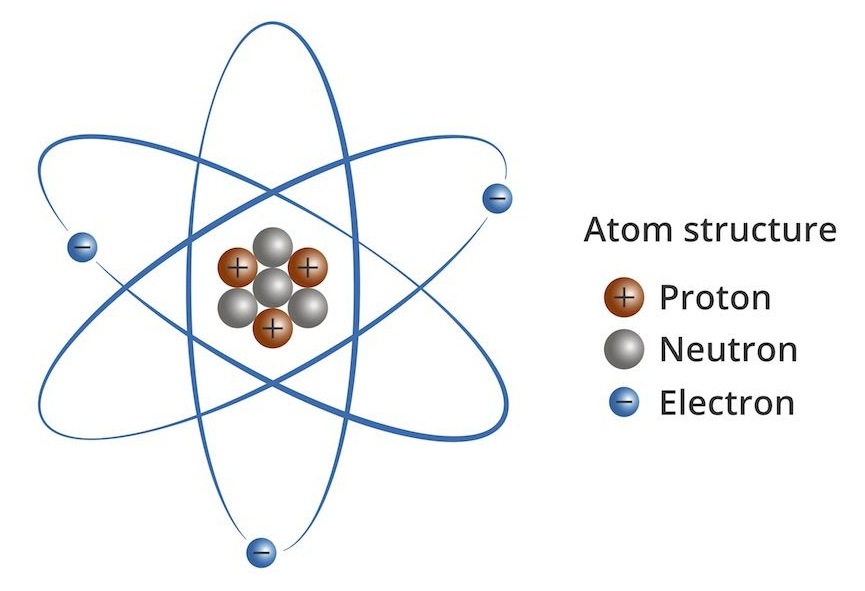
Atomic Structure
(Image credit: https://www.livescience.com/)
The Nadi (नाडी)
- Ida (Feminine and Creative Principle)
- Pingala (Masculine and Analytical Principle)
- Sushumna (Gracious Principle)
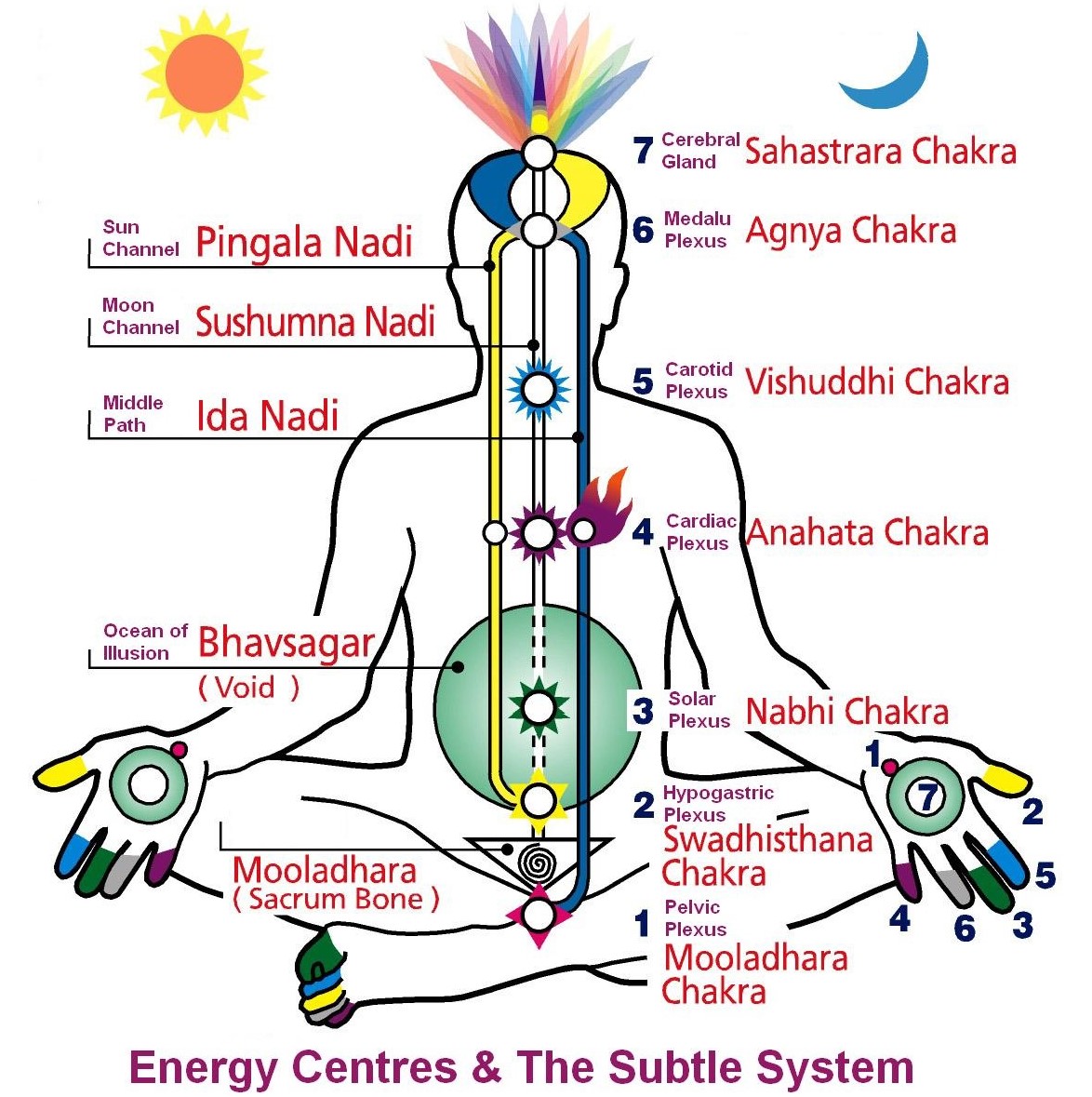
Ida, Pingala and Sushumna Nadi
(Image Credit: Google.Com)
The Three Types of Happiness (सुख) or Miseries (दुःख)
- Physical
- Mental
- Spiritual
The Three Letter in OM/AUM (ॐ / ओ३म्) Pronunciation / Sound of Universe
- A
- U
- M
(Video Credit: YouTube Channel – Melania Anghel)
The Three Dimensions of any Geometric Body
- Length ( L )
- Width ( W )
- Height ( H )
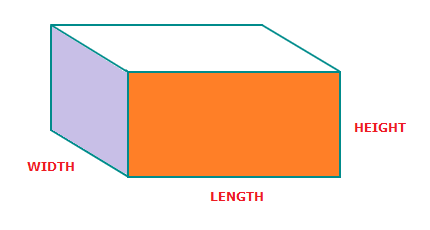
Thee Dimensions
(Image Credit: https://www.mathlearnit.com/)
The Three Basic Gender (लिंग)
- Feminine (स्त्रीलिंग)
- Masculine (पुल्लिंग)
- Neuter (नपुंसक)
The Three Words of Satchitananda (सच्चिदानन्द)
- Sat (सत्) – Truth / Existence / Reality / Being
- Chit (चित्) – Consciousness / Awareness
- Ananda (आनन्द) – Bliss
Satchitananda (Sanskrit: सच्चिदानन्द) is a compounded Sanskrit word consisting of “sat”, “chit” and “ananda”, all three considered as inseparable from the nature of ultimate reality called Brahman.
The Three Paths to Salvation (मोक्ष)
The Bhagavad Gita is the only source for the means to moksha (liberation) which explain the nature of these three paths and the relation between them.
- The Karma yoga
- The Gnana yoga
- The Bhakti yoga
The Soul (आत्मा) Covered by Three Types of Bodies
- Gross Body or Physical Body (Sthula Sharira)
- Subtle Body or Astral Body (Linga Sharira / Sukshma sarira)
- Causal body (Karana Sharira)
According to Hinduism human individual has three bodies: a Physical or Gross body (Sthula Sharira), a Subtle body (Linga/Sukshma Sharira), and a Causal body (Karana Sharira).
The life span of each of the bodies is different. The Gross body depends on gross food therefore has short life span, compared to subtle body that depends upon thoughts and feelings, therefore can survive longer. The Causal body survives the longest since it needs only peace. The soul is different from these three bodies. The soul does not need anything since it is the experiencer, observer and therefore it is eternal.
To know more about this:
Hope you have enjoyed reading this mystery.
Please let us know if you have more mystery on number 3.
Mystery Is The Soul of Existence
By: Kedar Joshi
Discover more from MicrobiteWorld
Subscribe to get the latest posts sent to your email.

 MicrobiteWorld
Ohhh….nice study
LikeLiked by 1 person